Inside Precision

Dogs and humans share biomarkers of mortality
Published on March 26, 2026Dog Aging Project researchers wanted to know if molecules measured in blood samples from pet dogs could be used to predict the risk of death as the dogs age.
Read More
Scientific Results: Protein Catabolites as Blood-Based Biomarkers of Aging Physiology: Findings From the Dog Aging Project
Published on January 27, 2026The Dog Aging Project is working to understand how and why dogs age. By studying genetics, environment, and biology, researchers hope to learn what affects healthy aging in dogs. One area of interest is the identification of aging biomarkers, which are measurements that can be made across the life of a dog that reflect their aging.
Read More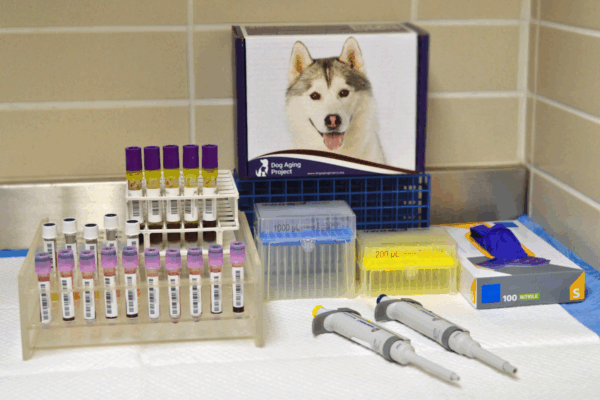
Scientific Results: Rationale and design of the Dog Aging Project precision cohort: a multi-omic resource for longitudinal research in geroscience
Published on July 30, 2025This paper introduces our Precision Cohort, which collects important biological information from dogs in our study group.
Read More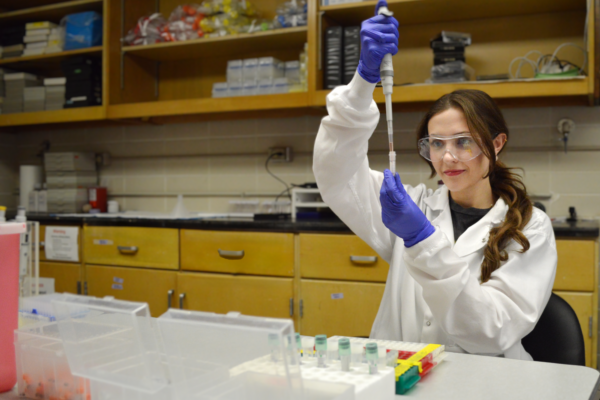
Scientific Results: The effects of resting time, centrifugation time, and technician training on plasma sample quantity and quality: Implications for the Dog Aging Project
Published on June 13, 2025Members of our Precision Cohort participate in an annual collection of routine samples like bloodwork (similar to an annual check-up), urine, feces, and hair collected by their primary care veterinarian.
Read More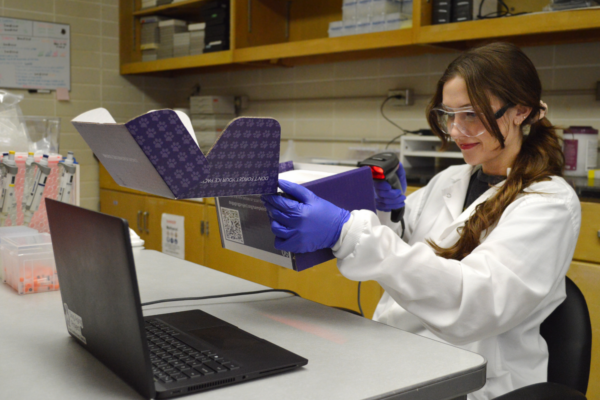
Scientific Results: Factors Associated With Missing Biological Samples in the Dog Aging Project
Published on May 6, 2025In scientific research that follows the same group of dogs over time – like the Dog Aging Project – each sample helps to tell an important part of each dog’s story.
Read More
Scientific Results: The companion dog as a model for inflammaging: a cross-sectional pilot study
Published on September 6, 2024Similar to what has been shown in people, aging dogs have increases in blood inflammatory markers. This indicates that aging in dogs, like people, may be accompanied by a proinflammatory state, known as inflammaging.
Read More
Canine Cognition: Introducing the Brain Health Study
Published on April 20, 2023The Brain Health Study is a nationwide study funded by the National Institute on Aging, a part of the National Institutes of Health, and is being conducted in collaboration with the Cornell University Veterinary Biobank to investigate the potential links between Alzheimer’s disease and a similar condition in dogs called canine cognitive dysfunction (CCD). CCD is a behavioral syndrome in older dogs that is defined by the development of symptoms similar to those observed in Alzheimer’s patients. This may include confusion, shifts in overall demeanor, or other changes in behavior that can dramatically affect our dogs’ quality of life. CCD may be as prevalent as 35% in dogs older than age eight.
Read More
Fountain of Youth: Understanding inflammaging and why we age
Published on May 12, 2022Getting older can take a toll on the body. As we age, we may experience more aches and pains, loss of memory, or changes in our vision and hearing. With increasing age, there is also an increased risk of developing chronic diseases. Studies show that nearly 80% of Americans over 65 have at least one chronic disease and 50% have at least two chronic diseases.
Read More