Building Science, One Brick at a Time
July 26, 2023 - 4 minutes readWe want to know about your dog’s whole life!
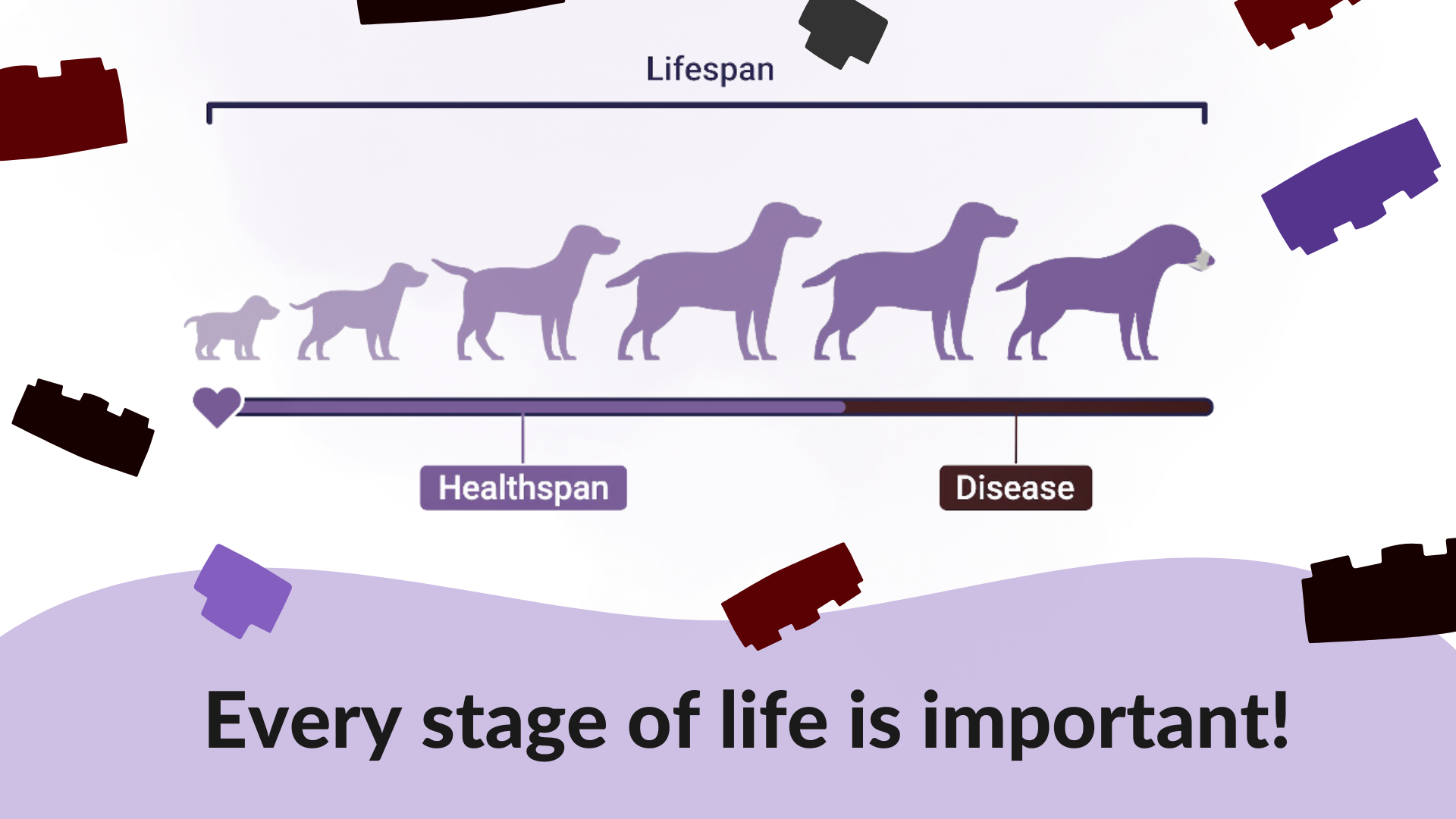
Longitudinal Study: Research that follows specific individuals over a period of time to determine what happens to them so that cause and effect can be identified.
Longitudinal. It’s a long word and an important one to the Dog Aging Project. In our quest to discover how to lengthen the healthspan of our canine companions, we want to study each dog’s life for as long as we can.
That means that no dog is too young or too old to be a member of our Pack. Your young pups allow us to study them over a longer period of their lives. Your older dogs give us information about how aging is expressed in different dogs.

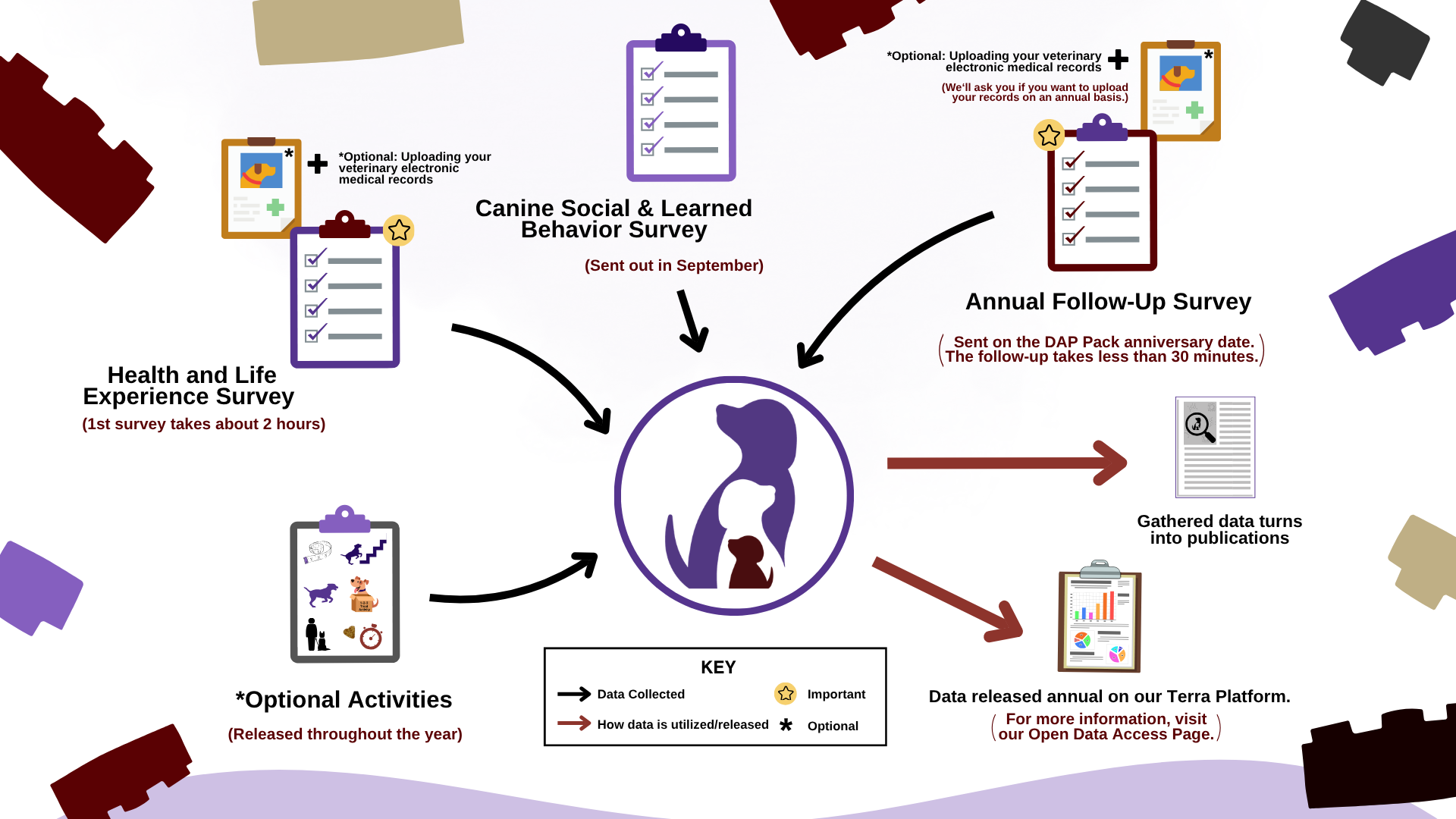
We understand that activities such as our Measurement and Mobility activity and our Cognitive Games, such as Treat Hide and Seek, may be too much for some older dogs. That is perfectly fine! By opting out and letting us know why, you are still contributing important data to the research. And, of course, our Annual Follow-Up Surveys and Canine Social and Learned Behavior Surveys will give us vital data about your aging dog that will help us understand when changes occur that affect healthspan and lifespan.
Comparing your dog’s surveys across the span of their lifetime is the core of our research.
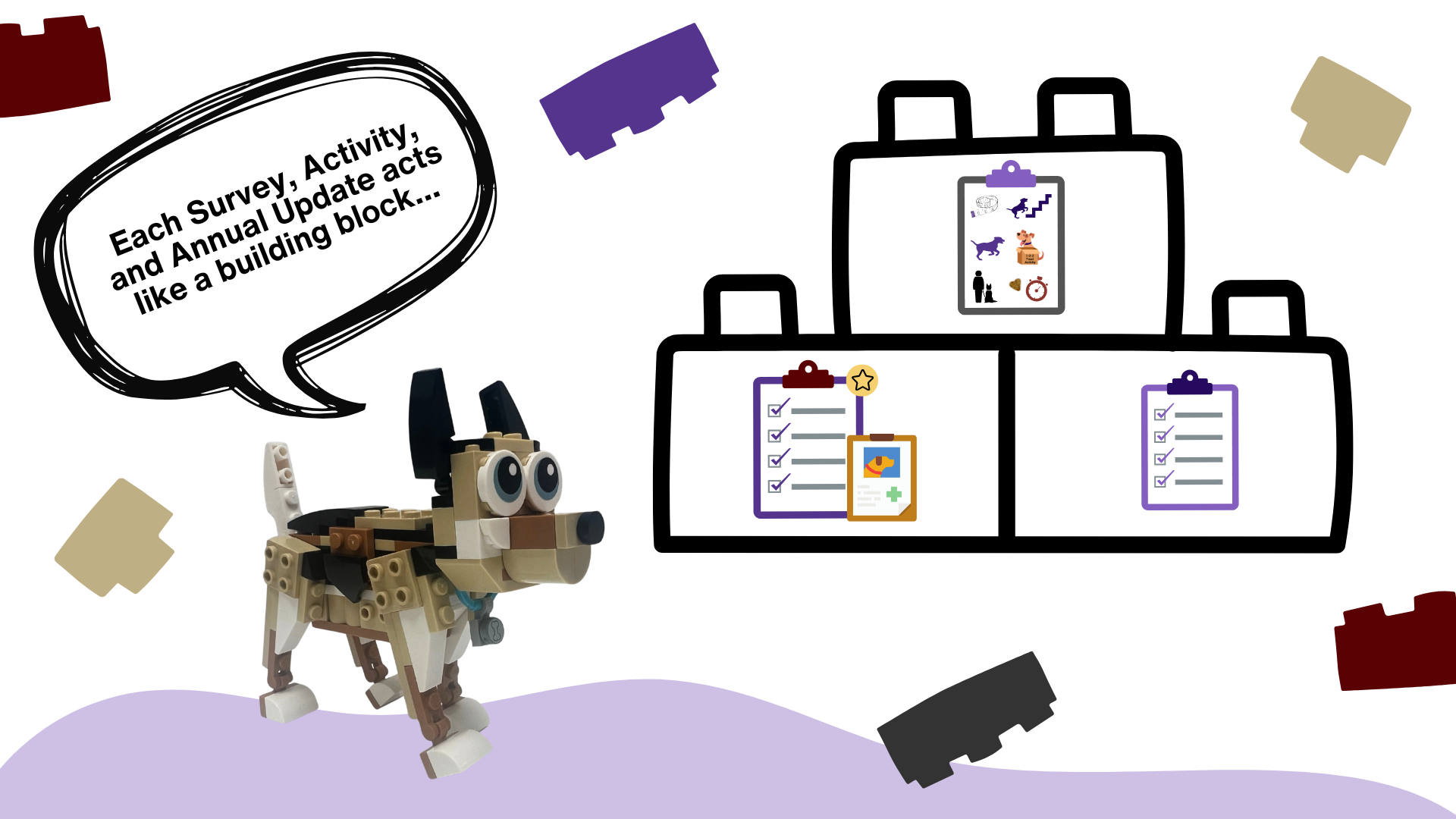
So, what happens with the data collected? After removing any personally identifying information, our team curates, or groups the information together, in data sets. You probably noticed that we try to do our activities and surveys at the same time each year.
Think about Legos, the plastic building blocks. Each brick has small, cylindrical studs on top that snap into other bricks. If the studs don’t line up, the bricks will not be attached securely. Our surveys and activities are scheduled to happen at the same time each year so we can create data sets that stack up like Legos. Then, they can be compared and contrasted with other data sets in a meaningful way. These data sets are released each year for our research team, as well as other interested researchers.
Want to read more about longitudinal studies and how they compare to other types?
The key to quality scientific research is asking the right questions and then making accurate interpretations of the data that you’ve collected to answer those questions. Often scientists will address the same research question from multiple perspectives. One example of this is the use of both cross-sectional and longitudinal approaches. The study design of the Dog Aging Project allows our scientists to do both! Read more here: Inside Science: Cross-sectional versus longitudinal study design

Posts in our Inside Science series provide you with the ins and outs of doing scientific research. We hope that understanding the process will get you excited about the cutting-edge research being conducted by the Dog Aging Project team
Stay in the know:
- Get our DAP Annual Task Calendar: This handout helps you keep track of when the annual follow-up survey and activities will be released in your Dog Aging Project personal portal.