How Your Continued Participation Helps Science
June 24, 2024 - 4 minutes readThe Dog Aging Project’s longitudinal study is the backbone of our scientific research, offering invaluable insights into how dogs’ lives and health change over time. Our team follows our Pack members for an extended period, ideally through the end of their lives, capturing their environments, behaviors, and health outcomes across all stages of life. And sometimes that means our precious pups start showing signs of aging, such as mobility or cognitive issues, or diseases such as cancers. When dogs’ health declines, sometimes our project staff gets messages from our participants asking if they should quit the project. The extra activities are just too much for some older dogs.
While remaining in our longitudinal study with an aging dog may seem daunting, the benefits far outweigh the effort required. Here’s why your continued participation is so vital:
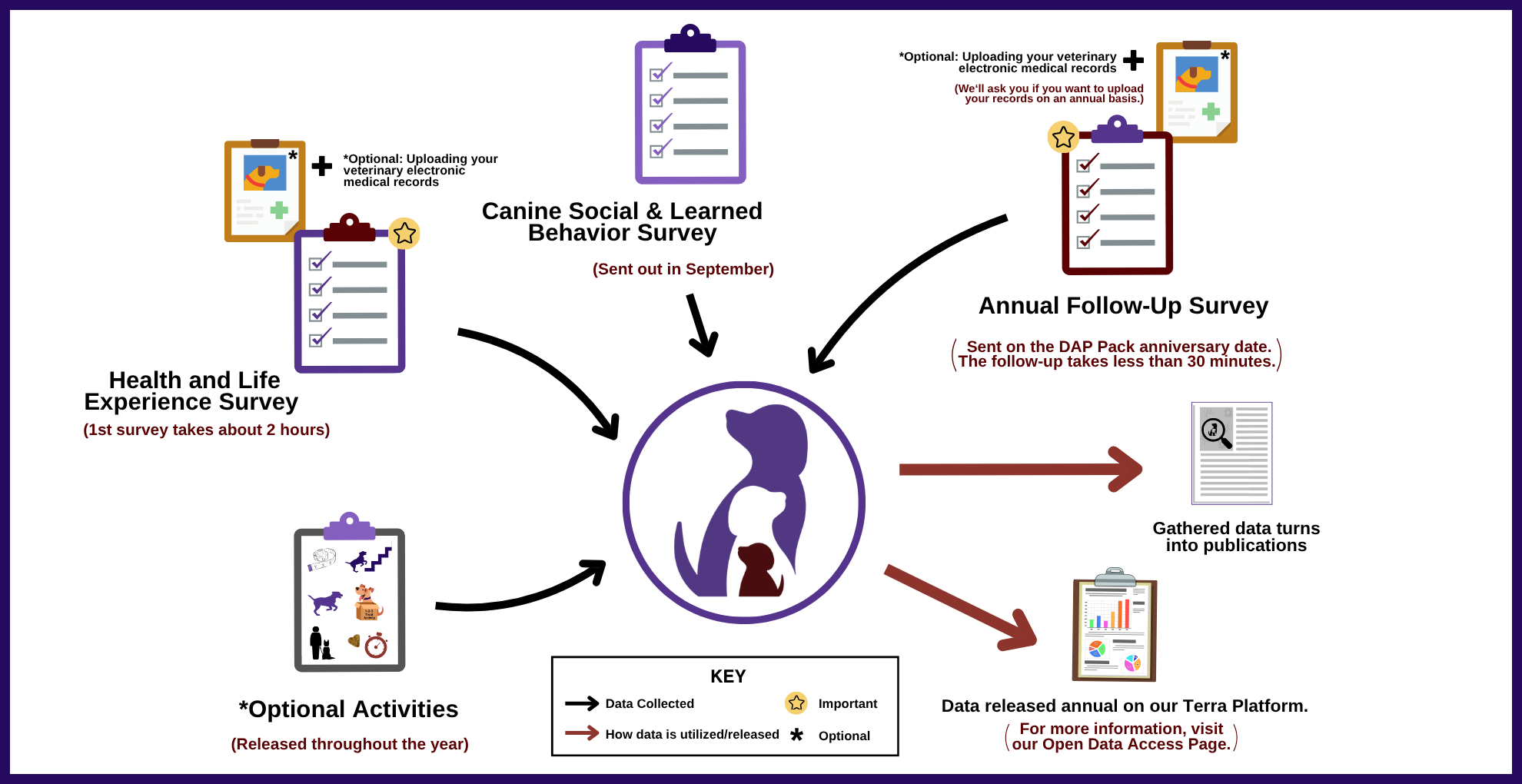
1. Contribution to Knowledge: By remaining in the longitudinal study, participants and their dogs contribute directly to the advancement of science. Their continued involvement allows researchers to observe trends, identify risk factors, and develop interventions that can improve health outcomes and quality of life for dogs to come. Most of this contribution is through our surveys, the Annual Follow-Up Survey, and the Canine Learned and Social Behavior Survey.
“If you or your dog are not up to the optional activities such as 1-2-3 Treat Activity or Measurement and Mobility Activities, that’s Okay! We ask that you simply opt out when the task appears. You are not required to complete these activities.”
2. Understanding Change: Life is a dynamic journey marked by numerous transitions and milestones. Longitudinal studies provide a unique opportunity to understand how and why dogs change over time. Your engagement from puppyhood through your dog’s senior years gives researchers the data to unravel the complexities of canine growth and behavior.
3. Long-Term Impact: The findings of longitudinal studies have profound implications for public policy, healthcare practices, and well-being. By staying involved, you contribute to the generation of evidence that can shape future interventions, programs, and regulations aimed at improving health outcomes.
4. Community Engagement: Longitudinal studies foster a sense of community among participants. Over time, individuals develop relationships with researchers and fellow participants, creating a supportive environment for sharing experiences and insights. This sense of belonging can be empowering and enriching for all involved.
5. Legacy and Posterity: Participation in a longitudinal study leaves a lasting legacy. By contributing your data and experiences, you and your dog will leave a mark on scientific knowledge that can benefit future generations. This act of generosity ensures that their journey serves as a blueprint for understanding human health and behavior long after they are gone.
Staying engaged in our longitudinal study is not just a commitment; it’s an investment in the future of science and the well-being of dogs. By continuing, you are contributing to a collective effort to unravel the mysteries of aging and pave the way for healthier, longer lives for dogs and humans.
Learn more:
Check out the following blog posts to dive deeper:
- Dog Aging Project Data: A Resource for Scientists Worldwide
- Open Data, Open Possibilities
- Fountain of Youth: Understanding inflammaging and why we age
Stay in the know:
- Get our DAP Annual Task Calendar: This handout helps you keep track of when the annual follow-up survey and activities will be released in your Dog Aging Project personal portal.