A Milestone for the Dog Aging Project: Dr. Kate Creevy Earns AVMA Career Achievement Award
July 22, 2026 - 7 minutes readThe Dog Aging Project is proud to celebrate a remarkable milestone by one of its visionary leaders. Dr. Kate Creevy, chief veterinary officer of the Dog Aging Project, professor of small animal internal medicine at the Texas A&M University College of Veterinary Medicine & Biomedical Sciences, has been named the recipient of the 2026 American Veterinary Medical Association (AVMA) Career Achievement in Canine Research Award, one of the veterinary profession’s highest honors. The award recognizes a veterinarian whose career has made a lasting and significant impact on canine health and research.
For those familiar with Dr. Creevy’s work, this recognition is well-deserved and expected. Throughout her career, she has dedicated herself to advancing our understanding of canine aging, longevity, mortality, and age-related disease. Her leadership has helped transform not only how researchers study aging in dogs but also how veterinarians and dog owners think about healthy aging and lifespan.
“This recognition is deeply meaningful to me,” said Dr. Creevy. “It’s a privilege to work with both our participating dogs and the people who love them to better understand and improve the aging experience. I am honored that my peers and colleagues deemed me worthy of this award.”
Building a Landmark Research Initiative
Since its launch in 2019, the Dog Aging Project has grown into the largest long-term study of canine aging ever undertaken. As an open-science initiative, the project follows more than 50,000 companion dogs across the United States, seeking to understand how genetics, environment, lifestyle, and medical history influence healthy aging and longevity.

Dr. Creevy played a central role in building the scientific and operational framework that made this ambitious project possible. As chief veterinary officer, she helped establish the veterinary protocols, quality controls, and nationwide infrastructure that support the study’s ongoing success. The project’s recruitment and retention efforts continue to be supported through funding from the National Institute of Aging and philanthropic donations exceeding $4 million.
Expanding Knowledge Through Open Science
One of Dr. Creevy’s most significant contributions has been her commitment to making research accessible and impactful. She served as first author of the landmark 2022 Nature publication that introduced the Dog Aging Project to the global scientific community. Since then, the consortium has produced more than 80 peer-reviewed scientific publications, contributing important discoveries about canine health and aging.
In keeping with the project’s open-science mission, curated and de-identified data from participating dogs are shared with qualified researchers worldwide. To date, more than 300 research access requests have been fulfilled, helping maximize the scientific value of every dog participating in the study.
The impact of this work continues to grow. In the past year alone, two Dog Aging Project publications ranked among the five most-read articles in the American Journal of Veterinary Research, demonstrating the broad interest and influence of the project’s findings with the veterinary community.
Advancing the Future of Healthy Aging
Dr. Creevy’s work extends beyond observing aging to actively exploring interventions that may improve healthspan. As principal investigator of the Test of Rapamycin in Aging Dogs (TRIAD), a multicenter, randomized, placebo- controlled clinical trial, she is studying whether low-dose rapamycin can help extend healthy lifespan in dogs.
This research exemplifies the Dog Aging Project’s commitment to the One Health approach, recognizing that discoveries about aging in companion dogs may also provide insights relevant to human health and aging.
A Career of Leadership, Mentorship, and Impact
Beyond her groundbreaking research, Dr. Creevy is recognized as an educator, mentor, and collaborator. She has authored and co-authored numerous scientific publications, guided students and early-career researchers, and worked across disciplines to advance canine health research. She also served as lead author of the American Animal Hospital Association (AAHA) Canine Life Stage Guidelines, a foundational resource for preventive veterinary care.
Her accomplishments have earned numerous honors over the years, including the Zoetis Award for Veterinary Research Excellence, Texas A&M University’s Outstanding Research Leader Award, the Presidential Impact Fellowship, and the Texas Veterinary Medical Association Faculty Achievement Award for Research.
Celebrating an Achievement Shared by the Entire Community
While this award recognizes Dr. Creevy’s extraordinary career, it also reflects the collective efforts of the Dog Aging Project community, our participants, scientists, veterinarians, staff, supporters, and most importantly, the thousands of dogs and families who make this research possible.
Dr. Creevy will be formally recognized during the AVMA Convention in Anaheim, California, July 10-14, 2026. As we celebrate this milestone, we remain inspired by her vision, leadership, and unwavering dedication to improving the lives of dogs and advancing the science of healthy aging.
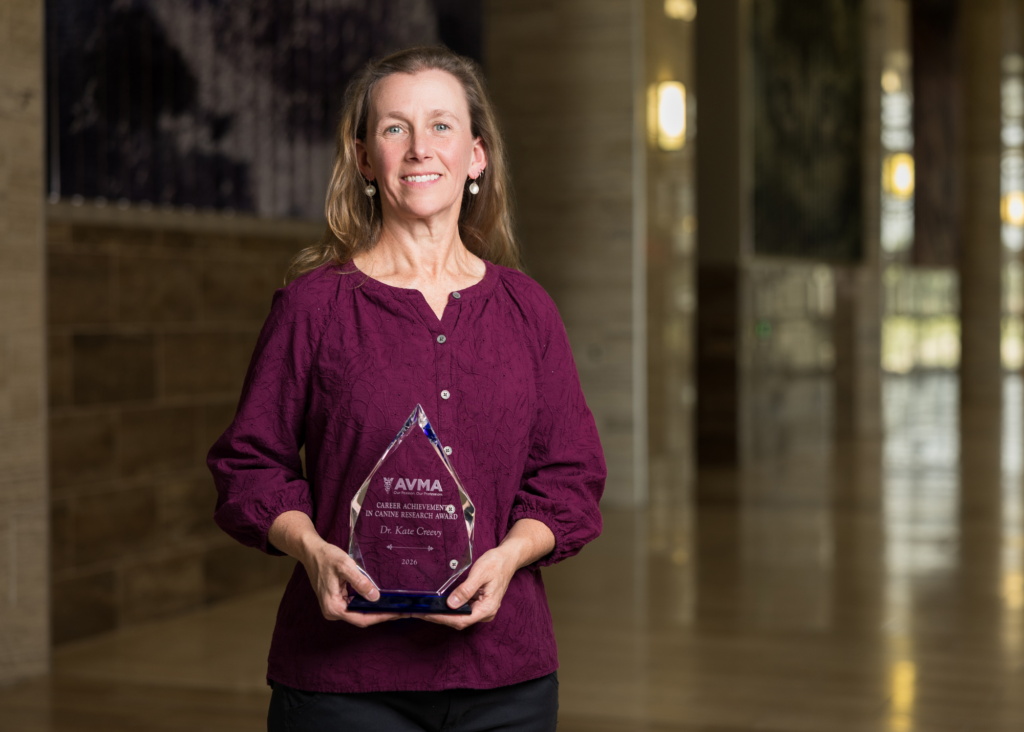 *Photo Credit: Texas A&M University CVMBS
Congratulations, Dr. Creevy, on this well-deserved honor. The entire Dog Aging Project community is proud to celebrate your achievement and grateful for your leadership in shaping the future of canine aging research.
Want to learn more?
Check out the following articles from the American Veterinary Medical Association (AVMA) and Texas A&M University Veterinary Medicine & Biomedical Sciences:
- Dr. Kate Creevy wins 2026 AVMA Career Achievement in Canine Research Award
- VMBS Professor Receives American Veterinary Medical Association Career Award